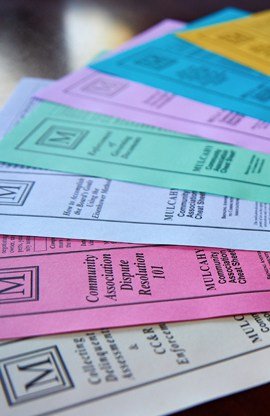
There are currently over 10,000 planned communities and condominiums in Arizona. Most HOAs and condominiums in Arizona were developed during the 1980s–1990s (during the state’s suburban expansion and adoption of HOA and Condominium laws). Decades later, 30 to 40-year-old HOAs and condominiums are struggling with aging infrastructure, limited reserve funds, and the growing need for strong, informed Board leadership. This cheat sheet explores practical strategies to help community leaders address these challenges head-on, ensuring the long-term health, safety, and financial stability of Arizona’s communities.
Reserve Funds
Maintaining a healthy reserve fund is essential for any community association—it’s not just good practice, it’s a legal and fiduciary responsibility. Reserve funds provide the financial backbone for planned repairs and replacements of major components and common area assets, ensuring costs are distributed fairly between current and future owners. A well-managed reserve fund also minimizes the need for surprise special assessments and helps preserve property values by demonstrating financial transparency and long-term planning.
Although not legally required, conducting regular reserve studies is widely recognized as a best practice. These studies evaluate the life expectancy and replacement costs of association assets, then recommend appropriate funding levels to meet future expenses. Updating reserve studies every three to five years helps associations stay ahead of inflation, changing conditions, and unexpected repair needs—creating a financial safety net that protects both homeowners and the community’s overall stability.
Conversely, underfunded reserves can lead to deferred maintenance, emergency assessments, and higher long-term costs. Poor reserve management may also result in homeowner frustration, loss of trust, or even legal disputes. Proactive reserve planning supports compliance with financial disclosure laws and strengthens the association’s position with insurers and lenders. For a deeper dive into best practices and legal guidance on reserve fund management, see the Mulcahy Law Firm’s detailed cheat sheet: Reserve Funds for Community Associations | Mulcahy Law Firm
Deferred and Preventative Maintenance
Community association boards have a clear duty to maintain, protect, and enhance their properties through consistent, proactive maintenance. Neglecting maintenance doesn’t just lead to cosmetic issues—it causes deterioration that can trigger crisis-level repairs, special assessments, and declining property values. Planned upkeep safeguards a community’s infrastructure, promotes resident safety and well-being, and helps preserve long-term financial stability. (Source: CAI Best Practices Report on Maintenance)
Effective maintenance programs distinguish between preventive, corrective, and deferred maintenance:
Preventive maintenance: includes scheduled tasks such as cleaning drains, gutters, and common areas or touch-up painting—efforts that help prevent deterioration before it starts.
Corrective maintenance: addresses repairs when components fail, such as fixing leaks or replacing broken pavement or roof tiles.
Deferred maintenance: occurs when necessary work is postponed—often leading to accelerated damage and significantly higher repair costs down the road.
To manage these responsibilities effectively, associations should create a comprehensive maintenance plan and schedule. This includes identifying all assets and responsibilities (as outlined in governing documents), consulting with community managers, contractors, and reserve analysts, and establishing clear inspection frequencies. A master plan should incorporate photos, inspection schedules, and maintenance data for all building components—including those not typically covered in reserve studies, such as drainage systems, waterproofing, and structural elements. For mid- and high-rise condominiums, specialized plans should also address mechanical systems like HVAC, fire suppression, and elevators.
Proactive maintenance not only extends asset life and improves safety but can also save money—studies by Jones Lang LaSalle show that preventive maintenance yields an impressive 545% return on investment. Transparent communication with homeowners about maintenance progress further builds trust and accountability within the community.
Inspections
Early and consistent inspections are vital to the safety and longevity of community associations. Regular evaluations help detect hidden issues such as water intrusion, corrosion, or structural cracking—problems that, if ignored, can escalate into major repairs or safety hazards. The tragic 2021 collapse of the Champlain Towers South condominium in Surfside, Florida, underscored the devastating consequences of deferred maintenance and insufficient inspections. Despite a 2018 engineering report warning of significant structural damage, repairs were delayed, leading to the catastrophic failure that claimed 98 lives. This event serves as a powerful reminder of why every association must take inspection obligations seriously.
Effective inspection programs should begin early and occur routinely—ideally at least once a year. Boards should engage licensed, qualified professionals to perform inspections, document findings thoroughly, and integrate results into ongoing maintenance and reserve plans. Proactive inspection practices not only enhance resident safety but also protect property values, prevent costly emergency repairs, and reduce liability exposure for associations and their boards. For guidance, tools, and resources on building safety and inspection requirements, visit www.condosafety.com.
Insurance
Across Arizona and nationwide, community associations are facing unprecedented insurance cost increases. Many HOAs and condominiums have seen premiums double or even triple within a single year, placing significant financial pressure on both associations and homeowners. As insurers tighten underwriting standards or withdraw from certain markets altogether, associations are left with fewer coverage options, higher deductibles, and more restrictive policy terms. These conditions are forcing difficult financial decisions—such as raising assessments, cutting back on services, or levying special assessments—to maintain adequate coverage.
To manage these challenges, associations must take a proactive and strategic approach to risk management and insurance planning. Boards should conduct regular insurance reviews to ensure policies reflect current property values, exposures, and coverage needs. Risk assessments can identify opportunities to reduce liability—through safety improvements, updated maintenance practices, or disaster preparedness measures. Collaboration with qualified insurance brokers can help associations compare carriers and negotiate the best possible terms in a limited market. Above all, transparent communication with homeowners about insurance costs and their impact on budgets builds understanding and trust while ensuring the community remains financially protected.
Long-term Master-planning Strategies
A strategic plan provides community associations with a long-term roadmap for growth, sustainability, and resident satisfaction. Beyond day-to-day operations, it helps boards think big—defining what makes their community unique, identifying how to improve amenities and infrastructure, and planning how to meet both current and future resident needs. Strategic planning also allows boards to assess their own effectiveness and explore ways to strengthen governance and management practices.
Developing a strong plan begins with defining clear mission and vision statements—the foundation of all strategic efforts. The mission outlines the association’s purpose and core objectives, while the vision describes the desired future state of the community. Once these are established, boards should hold a dedicated strategic planning meeting to evaluate strengths, weaknesses, and opportunities. During these discussions, all board members can share project ideas and prioritize a manageable set of 3–5 initiatives. Projects should then be organized into immediate, mid-term, and long-term categories with measurable goals spanning 1, 5, 10, and 15 years. Funding can be sourced through reserves, assessments, or loans, depending on scope and urgency.
Implementation is where planning turns into progress. Boards should consult experts—such as community managers, reserve analysts, or legal counsel—when specialized insight is needed. A concise, flexible written plan should be approved by the board and revisited regularly, ideally twice a year, to assess milestones and make adjustments as conditions change. Common strategic priorities include enhancing community engagement, improving collections and compliance processes, developing long-term budgets, updating governing documents, and investing in safety, sustainability, and disaster preparedness. By maintaining focus and adaptability, associations can align everyday decisions with their broader mission and vision, ensuring the community’s long-term success.
(Source: Condo Control Property Management)